
There’s something about hitting Colorado’s mountain trails after dark that separates the casual weekend drivers from the serious off-road enthusiasts. Maybe it’s the challenge of navigating rocky switchbacks under a blanket of stars, or the thrill of exploring terrain that most people only see in daylight. Whatever draws you out there, one thing’s certain: your stock headlights aren’t going to cut it.
We’ve spent years helping Denver-area truck and SUV owners gear up for mountain adventures, and off-road lighting consistently ranks among the most important upgrades we recommend. When you’re crawling over boulders at 10,000 feet or navigating a narrow shelf road with a sheer drop on one side, visibility isn’t just about convenience, it’s about safety. The right lighting setup can mean the difference between spotting that washed-out section ahead or finding out the hard way.
In this guide, we’ll walk you through everything you need to know about choosing, mounting, and maintaining off-road lights for Colorado’s unique mountain terrain. From LED light bars to pod lights, mounting positions to local regulations, consider this your complete resource for lighting up the trail.
Why Quality Off-Road Lighting Matters in Colorado’s Mountains
Colorado’s mountain trails present challenges you simply won’t find in flatter terrain. We’re talking about elevation changes that can shift from 5,000 to over 12,000 feet in a single day trip, weather that turns on a dime, and trail conditions ranging from loose shale to deep ruts carved by spring runoff. Your lighting needs to handle all of it.
At higher altitudes, the air is thinner, and that affects how light travels. You might notice your factory headlights seem dimmer up there, it’s not your imagination. Combine that with the unpredictable mountain weather (afternoon thunderstorms are practically a Colorado summer tradition), and you’ve got a recipe for seriously compromised visibility.
Then there’s the terrain itself. Unlike desert trails or forest roads, mountain trails often feature tight switchbacks, off-camber sections, and obstacles that can appear suddenly around blind corners. Quality off-road lighting gives you the reaction time you need. We’ve seen too many rigs come into our shop with undercarriage damage that could’ve been avoided with better forward visibility.
There’s also the wildlife factor. Elk, mule deer, and even the occasional moose don’t check for traffic before crossing trails. High-quality lights with proper beam patterns help you spot animals at a distance, giving you time to slow down safely.
Bottom line: investing in quality off-road lighting isn’t just about making your truck look tough (though that’s a nice bonus). It’s about protecting your vehicle, your passengers, and making sure you get back home after every adventure.
Types of Off-Road Lights for Trail Driving
Not all off-road lights serve the same purpose, and understanding the differences will help you build a lighting setup that actually works for mountain trail driving. Here’s the breakdown of what’s available and where each type shines, literally.
LED Light Bars
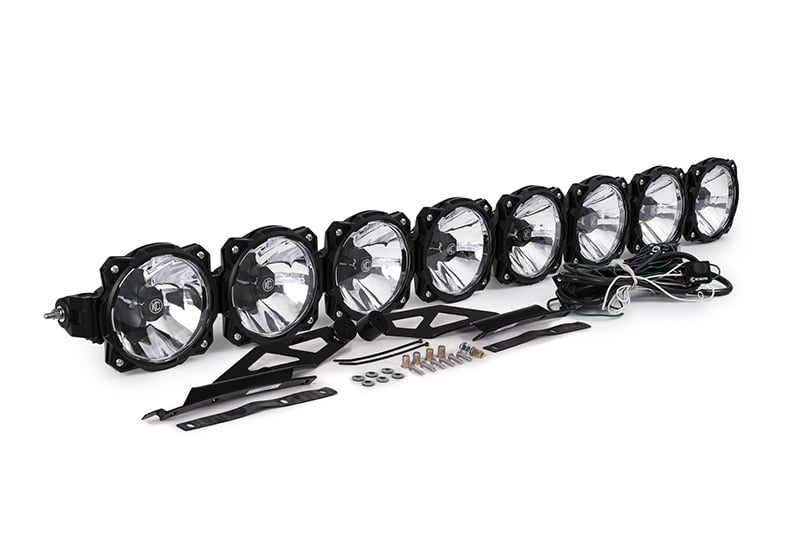
LED light bars have become the go-to choice for serious off-roaders, and for good reason. These rectangular fixtures pack dozens of individual LED chips into a single housing, producing massive amounts of light while drawing relatively little power. For mountain trail driving, light bars in the 20- to 50-inch range offer the best balance of coverage and practicality.
The big advantage of light bars is their versatility. Many models combine spot and flood beam patterns in a single unit, giving you both long-distance reach and wide peripheral coverage. When you’re navigating a narrow trail with drop-offs on either side, that peripheral vision matters.
We typically recommend curved light bars for roof or windshield mounting, as the curve helps push light further to the sides. Straight bars work great for bumper or grille guard mounting where you want more focused forward illumination.
Spotlights and Flood Lights
Spotlights and flood lights are the traditional workhorses of off-road lighting, and they’re still highly relevant today. The difference between them comes down to beam pattern: spotlights produce a narrow, concentrated beam that reaches far into the distance, while flood lights cast a wide, shorter-range pattern.
For mountain trails, we often suggest running a combination. Mount spotlights higher up (on a roll bar or roof rack) to see what’s coming down the trail, and position flood lights lower to illuminate the immediate area around your vehicle. This combo approach gives you the best of both worlds.
Round spotlights in the 6- to 9-inch range remain popular choices, and modern LED versions outperform the old halogen units by a significant margin. They run cooler, last longer, and typically draw less power from your electrical system.
Pod Lights and Rock Lights
Pod lights are compact, versatile fixtures that can be mounted almost anywhere on your vehicle. Usually measuring 3 to 5 inches across, they’re perfect for filling in gaps in your lighting coverage or adding illumination to specific areas. Many off-roaders mount them on their A-pillars, mirrors, or grille guards for additional forward-facing light.
Rock lights deserve special mention for mountain trail driving. These small, ultra-durable lights mount underneath your vehicle and point downward, illuminating the ground directly beneath and around your tires. When you’re picking your line through a boulder field or trying to see where your wheels are placed on a narrow ledge, rock lights are invaluable. They’re also great for checking clearance and spotting obstacles you might otherwise miss.
At Jazz It Up, we carry a full selection of these lighting options and can help you determine the right combination for your specific rig and the trails you frequent.
Key Features to Look for in Mountain Trail Lighting
Shopping for off-road lights can get overwhelming fast, there are hundreds of options out there, and the spec sheets are full of numbers that may or may not matter. Here’s what actually counts when you’re choosing lights for Colorado’s mountains.
Lumen Output and Color Temperature
Lumens measure total light output, and more is generally better for off-road use. For primary trail lighting, look for fixtures producing at least 4,000 to 6,000 lumens. Larger light bars can push 20,000+ lumens, which sounds excessive until you’re trying to see through a sudden snow squall at 11,000 feet.
Color temperature, measured in Kelvin, affects how the light appears. Most quality off-road lights fall in the 5,000K to 6,500K range, which produces a bright white light similar to daylight. Some drivers prefer a slightly warmer (lower K) light for dusty or snowy conditions, as it reduces glare and eye strain. Cooler (higher K) lights can make obstacles easier to distinguish.
IP Rating and Build Quality
The IP (Ingress Protection) rating tells you how well a light resists dust and water. For mountain use, we recommend nothing less than IP67, that means completely dust-tight and able to withstand temporary submersion. IP68 or IP69K ratings offer even more protection.
Construction matters too. Look for die-cast aluminum housings (they dissipate heat better than plastic), stainless steel mounting hardware (rust is real at altitude), and polycarbonate or tempered glass lenses that can handle impacts from trail debris.
Heat Management
LED lights generate heat, and that heat needs somewhere to go. Quality lights feature finned housings or other heat-sink designs that keep operating temperatures in check. Poor heat management leads to reduced light output, shorter lifespan, and potential premature failure, none of which you want when you’re miles from the nearest paved road.
Beam Pattern Options
As we mentioned earlier, spot beams reach far, flood beams spread wide, and combo beams try to do both. For mountain trail driving, combo patterns usually make the most sense for your primary lights. You can always add dedicated spot or flood fixtures later to fine-tune your setup.
Electrical Draw
High-output lights can stress your vehicle’s electrical system, especially if you’re also running a winch, air compressor, or other accessories. Check the amperage draw of any lights you’re considering and make sure your alternator and wiring can handle the load. Many trucks benefit from an upgraded alternator or auxiliary battery setup when adding serious lighting.
Best Mounting Positions for Maximum Trail Visibility
Where you mount your lights matters almost as much as which lights you choose. Each mounting position offers different advantages, and the best setups typically use multiple locations to create layered coverage.
Bumper and Grille Guard Mounts
Mounting lights low, on or near your bumper, puts them close to ground level where they can illuminate the immediate trail surface. This position is excellent for seeing rocks, ruts, and other obstacles directly in front of your vehicle. The downside? Low-mounted lights are more vulnerable to damage and can create harsh shadows that make depth perception tricky.
If you’ve already got a grille guard installed (a smart move for mountain trails), it often includes provisions for mounting lights. This raises them slightly off the bumper and provides some protection.
Roll Bar and Roof Rack Mounting
Higher mounting positions, on a roll bar or roof rack, give you superior long-range visibility. Light mounted at cab height or above can “see” over obstacles and around corners better than low-mounted alternatives. You’ll spot wildlife, trail hazards, and other vehicles much earlier.
The trade-off is that high-mounted lights can create significant glare and reflection off your hood, especially on vehicles with lighter-colored paint. Some drivers solve this with a light bar shade or by angling the lights slightly upward.
Roll bars also provide a secure mounting platform that keeps your lights safe from low-hanging branches and brush. At Jazz It Up, we install roll bars from several manufacturers and can integrate lighting into the setup from the start.
A-Pillar and Mirror Mounts
A-pillar mounts position lights at the corners of your windshield, providing excellent side-forward illumination. They’re popular for good reason: they help you see into turns and switchbacks before you commit. Ditch lights, as they’re sometimes called, fill a visibility gap that forward-facing lights alone can’t cover.
Mirror mounts accomplish something similar and work well on vehicles where A-pillar mounting isn’t practical.
Cab-Over Lights
Cab-over lights sit on your roof, typically in a bar or row configuration. They offer the highest possible mounting position (other than roof-rack lights), which maximizes your viewing distance. Just be aware that they add height to your vehicle, which can matter on trails with low-clearance obstacles.
Colorado Regulations and Trail Etiquette for Off-Road Lights
Before you light up your rig like a stadium, there are some legal and practical considerations to keep in mind. Colorado has specific laws governing auxiliary lighting, and the off-road community has developed its own etiquette around light use.
Legal Requirements
On public roads in Colorado, auxiliary lights face restrictions. Forward-facing lights beyond your standard headlights must be covered or turned off when driving on highways and streets. Colored lights (other than white or amber to the front, red to the rear) are generally prohibited. Violating these rules can result in equipment citations and, potentially, problems with your insurance if you’re involved in an accident.
The good news: once you’re off-highway on designated trails, these restrictions typically don’t apply. You’re free to use your lighting setup as needed. Just remember to cover or disable those lights before you hit the pavement again.
Trail Etiquette
Even where it’s legal to run full lighting, common courtesy matters. If you encounter other vehicles on the trail, dim your lights or switch to a lower-output setting. Blinding oncoming drivers is dangerous and makes you look like a jerk, neither outcome is ideal.
When you’re in a group, avoid pointing your lights directly at the vehicle ahead. Angle them slightly or reduce output to keep from washing out the lead driver’s mirrors and making it harder for them to see.
Many experienced off-roaders carry light covers that can be quickly installed when conditions don’t require full illumination. It’s a simple solution that keeps your lights protected and your fellow trail users happy.
Wildlife Considerations
Colorado Parks and Wildlife asks off-roaders to be mindful of light pollution in sensitive wildlife areas. Excessive lighting can disturb nesting birds, disorient nocturnal animals, and disrupt natural behaviors. When possible, use only the lighting you actually need, and avoid running rock lights or other auxiliary fixtures just for show.
Maintenance Tips for High-Altitude Conditions
Colorado’s mountain environment is tough on equipment. Temperature swings, UV exposure, moisture, and trail debris all take their toll. Here’s how to keep your off-road lights performing at their best.
Regular Cleaning
Dust, mud, and road grime accumulate fast on trail-driven vehicles. Dirty lenses reduce light output significantly, sometimes by 30% or more. Make a habit of cleaning your lights after every trail trip. Use a soft cloth and gentle cleaner: avoid abrasive materials that can scratch polycarbonate lenses.
Check Connections and Wiring
Vibration from rough trails can loosen connections over time. Periodically inspect your wiring harnesses, connectors, and mounting hardware. Look for signs of corrosion (common at altitude where moisture can condense and freeze) and address any issues before they leave you dark on the trail.
Dielectric grease applied to electrical connections helps prevent corrosion and ensures reliable contact. It’s a cheap, easy step that pays dividends.
Inspect Seals and Housings
The seals that keep moisture out of your light housings can degrade over time, especially under UV exposure at higher elevations. Look for any signs of fogging inside your lights, that indicates a compromised seal. Some lights can be resealed: others may need replacement.
Check housings for cracks or damage after any particularly rough trail session. Even small cracks can let moisture in.
Mounting Hardware
Stainless steel hardware resists rust but isn’t immune to it. Inspect your mounting bolts and brackets regularly. A light that vibrates loose on the trail is at best annoying and at worst a safety hazard or a lost investment.
Seasonal Considerations
If you store your vehicle for part of the year (or just don’t trail-ride in winter), cover your lights or store them inside. Extended exposure to Colorado’s intense sun can yellow lenses and degrade plastics. Cold weather can make some seals brittle, so a thorough inspection in spring before hitting the trails is always smart.
Conclusion
Navigating Denver’s mountain trails after dark demands respect for the terrain and the right equipment to handle it. Quality off-road lighting transforms challenging night runs from nerve-wracking ordeals into adventures you’ll actually enjoy, and come home from safely.
The key takeaways? Match your lighting to Colorado’s unique conditions: go with high-lumen LED options that can handle altitude, weather, and abuse. Think strategically about mounting positions to layer your coverage from ground level to roof height. Stay legal on the pavement and courteous on the trails. And don’t neglect maintenance, because the mountains will punish gear that isn’t properly cared for.
At Jazz It Up Truck and Auto Accessories in Centennial, we’ve been helping Colorado off-roaders build capable rigs for years. Our team knows the local trails, understands the conditions, and can recommend the right lighting setup for how you actually use your truck or SUV. Whether you need a full lighting overhaul or just want to add some rock lights before your next trip, we’ve got the parts, the expertise, and the installation services to get you trail-ready.
Stop by the shop or give us a call, we’re always happy to talk lights, trails, and everything in between. Your next mountain adventure is waiting.