
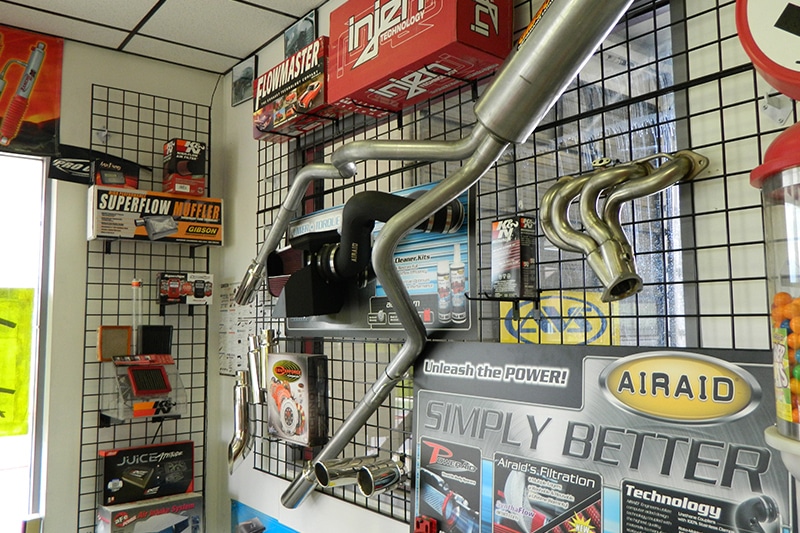
If you’ve ever stood next to a truck with a deep, rumbling exhaust note and felt that visceral pull, wondering if your own vehicle could sound that good while also putting down more power, you’re not alone. Performance exhaust systems are one of the most popular upgrades for trucks and SUVs, but the big question remains: do they actually deliver on their promises?
We get this question constantly at Jazz It Up in Denver, and the answer isn’t as simple as “yes” or “no.” The truth is, a well-designed performance exhaust system can absolutely make a measurable difference in horsepower, torque, and even fuel efficiency. But the degree of improvement depends on several factors, including your vehicle, the type of system you choose, and how it integrates with other performance parts. Let’s break down exactly how these systems work, and whether upgrading makes sense for your truck or SUV.
How Stock Exhaust Systems Work
To understand why performance exhaust systems make a difference, we first need to look at what your factory exhaust is actually doing, and why manufacturers design them the way they do.
Stock exhaust systems are built with compromise in mind. Automakers have to balance multiple priorities: emissions compliance, manufacturing cost, noise regulations, and yes, performance. But here’s the thing, performance usually lands pretty far down that priority list.
Your factory exhaust consists of several components working together. Exhaust gases exit through the exhaust manifold (which collects gases from multiple cylinders into a single pipe), pass through the catalytic converter (for emissions control), travel through the resonator and muffler (for sound dampening), and finally exit through the tailpipe.
The problem? Stock systems typically use smaller-diameter pipes, restrictive bends, and crush-bent tubing that creates turbulence and backpressure. While some backpressure is necessary for proper engine function, excessive restriction essentially makes your engine work harder to expel exhaust gases. Think of it like breathing through a narrow straw versus an open tube, one requires significantly more effort.
Manufacturers also use these restrictions deliberately to keep exhaust noise at socially acceptable levels. That quiet ride comes at a cost, though: your engine isn’t breathing as freely as it could, which means you’re leaving power on the table.
What Makes Performance Exhaust Systems Different
Performance exhaust systems tackle these restrictions head-on. They’re engineered specifically to improve exhaust flow, reduce backpressure, and, let’s be honest, give your vehicle a sound that actually matches its personality.
The key differences come down to design and materials. Performance systems typically feature:
- Mandrel-bent tubing instead of crush-bent pipes. Mandrel bending maintains a consistent diameter throughout curves, eliminating the pinch points that create turbulence and restriction.
- Larger pipe diameters that allow exhaust gases to exit more freely. But, bigger isn’t always better, the diameter needs to match your engine’s displacement and modifications to maintain proper exhaust velocity.
- Higher-quality materials like aluminized steel or stainless steel, which resist corrosion and can handle higher temperatures.
- Free-flowing mufflers designed to reduce restriction while still managing sound levels.
Cat-Back vs. Axle-Back vs. Header-Back Systems
When shopping for a performance exhaust, you’ll encounter three main configurations, and choosing the right one depends on your goals and budget.
Axle-back systems replace only the components from the rear axle to the tailpipe, typically just the muffler and tailpipe. These are the most affordable option and the easiest to install. You’ll notice a definite change in exhaust note, but performance gains are minimal since you’re only upgrading a small portion of the system.
Cat-back systems are the most popular choice for good reason. They replace everything from the catalytic converter back, including the mid-pipe, resonator, muffler, and tailpipe. This is where we see meaningful performance improvements, typically 5-15 horsepower on naturally aspirated engines, with greater gains on forced-induction vehicles. At Jazz It Up, we install a lot of cat-back systems from brands like Flowmaster because they offer that sweet spot of performance gains, improved sound, and reasonable cost.
Header-back systems go all-in, replacing the exhaust manifold with performance headers and everything downstream. Headers give each cylinder its own pipe, making it easier for the engine to push out exhaust gases. This is the most comprehensive (and expensive) approach, but it also delivers the biggest gains, especially when paired with other modifications like a cold air intake or engine tuning.
Horsepower and Torque Gains: What to Expect
Here’s where we have to get real with you: anyone promising 50+ horsepower from an exhaust upgrade alone is probably exaggerating. The actual gains depend heavily on your specific vehicle and what other modifications are in play.
For a stock truck or SUV with a naturally aspirated V8, a quality cat-back exhaust system typically adds 5-15 horsepower and similar torque gains. That might sound modest, but consider this, you’ll feel those gains most noticeably in the mid-range RPMs where you actually drive. It’s not just about peak numbers on a dyno sheet.
The gains become more significant when you’re working with forced-induction engines (turbocharged or supercharged). Because these engines are more sensitive to exhaust restriction, reducing backpressure can unlock 15-25+ horsepower. Some tuned vehicles see even greater improvements.
But here’s what we always tell customers at Jazz It Up: a performance exhaust system delivers its best results as part of a bigger picture. Combine it with a cold air intake to maximize airflow on the intake side, add performance headers to improve exhaust scavenging, and get your engine reprogrammed to take advantage of these modifications, now you’re looking at gains that genuinely transform how your truck feels.
We’ve seen trucks leave our shop with 40-50+ horsepower over stock when combining an exhaust system, cold air intake, headers, and custom tuning. That’s the kind of difference you feel every time you hit the gas, whether you’re merging onto I-70 or pulling a trailer up into the mountains.
Impact on Fuel Efficiency
This one surprises a lot of people, but yes, a performance exhaust can actually improve your fuel economy. It seems counterintuitive: how does adding power also save gas?
The answer comes back to engine efficiency. When your engine doesn’t have to work as hard to expel exhaust gases, it operates more efficiently overall. Less restriction means less wasted energy, which translates to better fuel economy, especially during highway cruising where the engine is under light load.
Now, we need to be realistic about expectations here. We’re typically talking about improvements in the range of 1-3 MPG, and only if you don’t change your driving habits. If you install a performance exhaust and then spend the next month flooring it at every green light because you love the new sound (we don’t blame you), those efficiency gains will evaporate pretty quickly.
The fuel efficiency benefits also compound when you combine exhaust upgrades with other modifications. A cold air intake brings cooler, denser air into the engine for more efficient combustion. Performance air filters improve airflow without sacrificing filtration. Throttle body spacers can adjust airflow characteristics for better economy and added torque. When these systems work together, you’re optimizing the entire breathing cycle of your engine, intake and exhaust, for maximum efficiency.
For drivers using their trucks for actual work, towing, hauling, daily commuting, these incremental improvements add up over time. Better fuel economy combined with more available torque means you’re not working your engine as hard to accomplish the same tasks.
Sound Quality and Exhaust Note Changes
Let’s be honest: for a lot of truck and SUV owners, the sound is just as important as the performance gains. There’s something deeply satisfying about an exhaust note that matches your vehicle’s attitude.
Performance exhaust systems offer everything from a subtle, refined tone to full-on aggressive rumble. At Jazz It Up, we work with Flowmaster systems specifically because they offer that range, mild to aggressive, so we can match the sound to what each customer actually wants.
The exhaust note you get depends on several factors:
- Muffler design: Chambered mufflers (like classic Flowmasters) produce that distinctive deep, aggressive tone. Straight-through designs tend to be louder and more raspy. Resonator-style mufflers offer a balance of flow and refinement.
- Pipe diameter: Larger pipes generally produce deeper tones, while smaller pipes can sound higher-pitched or tinny.
- System configuration: Dual exhaust setups typically sound fuller than single-exit systems.
- Your engine: A V8 will always sound different than a V6 or turbocharged four-cylinder, regardless of the exhaust system.
One thing we always discuss with customers is the difference between “loud” and “good.” A cheap, poorly designed exhaust can definitely be loud, but it might also drone annoyingly at highway speeds, produce unpleasant raspy tones, or just sound cheap. Quality systems are engineered to eliminate drone while still delivering that satisfying growl under acceleration.
The best approach? Come in and talk to us about what sound you’re actually looking for. We can point you toward systems that match your preferences, and in many cases, we can play samples or show you videos of specific setups on similar vehicles.
Cost Considerations and Return on Investment
Performance exhaust systems represent a real investment, so let’s talk numbers honestly.
Axle-back systems typically run $300-$700, depending on materials and brand. Cat-back systems generally fall in the $500-$1,500 range for quality options. Full header-back setups can push $1,500-$3,000+ when you factor in performance headers and professional installation.
Is it worth it? That depends on what you’re trying to accomplish.
If you’re primarily after sound improvement, an axle-back system delivers the most bang for your buck. You’ll get a noticeable exhaust note change without major expense.
For actual performance gains, horsepower, torque, and efficiency improvements, a cat-back system is typically the smart money. You’re getting meaningful upgrades at a reasonable price point, and the system will last for years with proper care (quality stainless steel systems can easily outlast the vehicle itself).
If you’re building a serious performance truck and planning multiple modifications, investing in headers and a complete system makes sense as part of that larger build. The per-dollar performance gain is actually better when you’re stacking modifications that complement each other.
We also factor in longevity. A quality performance exhaust system from a reputable manufacturer will likely last longer than your factory exhaust, which is built to hit a price point rather than maximize durability. Stainless steel construction resists the corrosion that eventually kills stock systems, especially here in Colorado where road salt can be brutal.
At Jazz It Up in Denver, we help customers figure out the right approach for their budget and goals. Sometimes that means starting with a cat-back system now and adding headers later. Sometimes it means doing a complete build all at once. There’s no single right answer, just the right answer for your situation.
Conclusion
So, do performance exhaust systems really make a difference? Absolutely, but the magnitude of that difference depends on your vehicle, the system you choose, and how it fits into your overall performance goals.
For most truck and SUV owners, a quality cat-back exhaust system delivers the ideal combination of noticeable power gains, improved exhaust sound, and potential fuel efficiency benefits. It’s a modification you’ll feel every time you drive and hear every time you start the engine.
The gains become even more significant when you pair your exhaust upgrade with complementary modifications, cold air intakes, performance air filters, headers, and engine tuning all work together to maximize what your engine can deliver.
Whether you need more power for towing, want that aggressive Flowmaster sound, or simply want to free your truck from the mediocrity of stock performance, we’re here to help you find the right setup. Stop by Jazz It Up in Denver, and let’s talk about what you’re looking to accomplish. We’ll get you set up with performance parts that actually deliver on their promises.