If you’ve ever hauled a trailer up I-70 toward the Eisenhower Tunnel or navigated a loaded camper through mountain switchbacks, you know that towing in Denver isn’t quite the same as towing in flat-terrain states. The combination of high altitude, steep grades, and unpredictable weather puts serious demands on your vehicle, and your suspension system takes the brunt of it.
At Jazz It Up Truck & Auto Accessories in Centennial, we’ve helped countless Colorado drivers upgrade their suspension setups to handle everything from weekend boat trips to full-time RV hauling. We’ve seen firsthand what works (and what doesn’t) when it comes to towing in the Mile High City and beyond. In this guide, we’ll break down the best suspension systems for towing in Denver, explain why your stock setup might not cut it, and help you figure out exactly what your truck or SUV needs to tow safely and comfortably.
Why Towing in Denver Demands a Quality Suspension System
Let’s be honest, towing anywhere requires your vehicle to work harder than usual. But Denver presents a unique set of challenges that can push even capable trucks to their limits. Before we jump into the types of suspension systems available, it’s worth understanding exactly why investing in quality suspension isn’t just a nice-to-have for Colorado drivers: it’s pretty much essential.
Elevation and Mountain Terrain Challenges
Denver sits at roughly 5,280 feet above sea level, and most popular towing destinations, campgrounds, ski resorts, hiking trailheads, are significantly higher. Your engine loses about 3% of its power for every 1,000 feet of elevation gain. That means by the time you’re climbing Vail Pass at over 10,000 feet, your engine is already working with reduced output.
Now add a 5,000-pound trailer to the equation. Your suspension has to compensate for the extra weight while your underpowered engine struggles on steep inclines. Poor suspension setup leads to dangerous trailer sway, reduced braking effectiveness, and excessive wear on your drivetrain. We see trucks come into our shop all the time with suspension that’s bottoming out or sagging badly under load, and that’s a recipe for losing control on a mountain descent.
The constant elevation changes also mean your suspension cycles through compression and rebound far more frequently than it would on flat highways. Those mountain passes aren’t just steep: they’re winding. Your suspension needs to handle weight transfer through corners while maintaining stability.
Weather and Road Condition Considerations
Colorado weather is, well, unpredictable. You might leave Denver on a sunny 60-degree morning and hit a spring snowstorm by the time you reach the Continental Divide. Winter towing conditions are especially demanding on suspension systems.
Icy roads and packed snow reduce traction dramatically, and a poorly balanced trailer becomes even more dangerous when your tires are already struggling for grip. A quality suspension system helps maintain consistent tire contact with the road surface, crucial when you’re hauling a camper through a sudden mountain squall.
Then there’s the road conditions themselves. Freeze-thaw cycles create potholes and heaving pavement throughout the Front Range. Mountain roads often have rough patches, gravel shoulders, and uneven surfaces. Your suspension needs to absorb these impacts without transferring that jarring motion back to your trailer, which can stress hitch connections and cause cargo damage.
Types of Suspension Systems for Towing
Not all suspension upgrades are created equal, and what works best depends on your specific towing needs, vehicle type, and budget. Here’s a breakdown of the main options we install at Jazz It Up.
Air Suspension Systems
Air suspension has come a long way from its origins in commercial trucks and buses. Today, air ride systems are available for a wide range of trucks and SUVs, and they’re increasingly popular among serious towers.
The beauty of air suspension is adjustability. You can inflate the air bags when you’re loaded down with a heavy trailer, then deflate them for a comfortable unloaded ride. This flexibility makes air suspension ideal for drivers who tow intermittently, say, hauling a boat on weekends but driving empty during the week.
Air systems excel at load leveling. When you hook up a heavy trailer, the rear of your vehicle naturally squats, which lifts the front end and reduces steering effectiveness. Air bags counteract this by providing additional support exactly where you need it. Many systems even allow on-the-fly adjustments from inside the cab.
The downsides? Air suspension systems are generally more expensive upfront and have more components that can potentially fail. Air lines, compressors, and bags all require periodic inspection. That said, modern air suspension is quite reliable, and for many towing applications, the benefits far outweigh the added complexity.
Coil Spring and Leaf Spring Upgrades
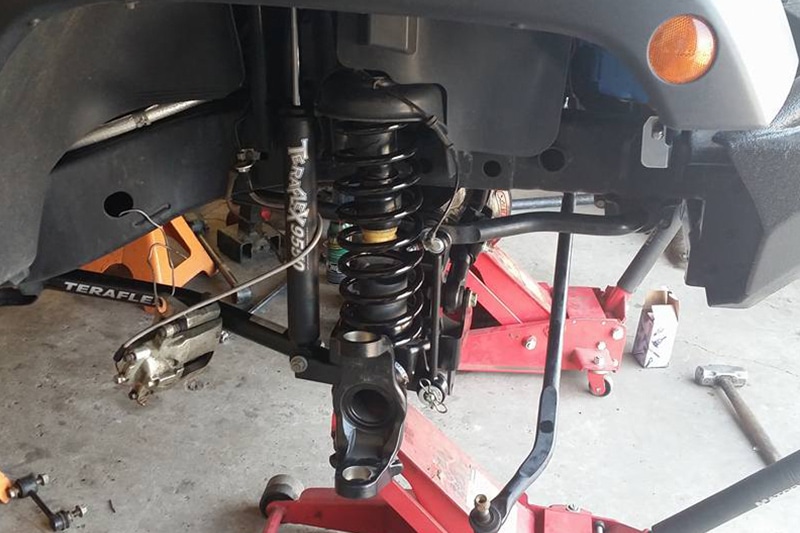
For trucks with traditional spring suspension, upgrading to heavier-duty springs is often the most straightforward path to better towing performance. We carry and install suspension parts from major manufacturers like Rancho Performance Suspension & Shocks, Skyjacker Suspension, and Pro Comp, all brands known for quality and durability.
Leaf spring upgrades are common for trucks that already use this setup (think Ford F-150s, Chevy Silverados, and similar). Adding leaves or replacing your factory springs with a heavier-duty pack increases load capacity and reduces sag. The trade-off is a stiffer ride when you’re not towing, though progressive-rate springs can help minimize this.
Coil spring upgrades work similarly for vehicles with coil rear suspension. You can install springs with a higher rate to handle increased loads, or opt for variable-rate springs that provide a comfortable ride empty but firm up under load.
Helper Springs and Add-On Kits
If you’re looking for a more budget-friendly option, or you only tow occasionally, helper springs and add-on kits might be the sweet spot. These systems work alongside your existing suspension rather than replacing it entirely.
Helper springs, also called overload springs, add supplemental support that kicks in when your suspension compresses under load. They’re relatively inexpensive and don’t dramatically change your unloaded ride quality.
Sumo Springs and similar bump stop replacements are another popular option. These polyurethane units replace your factory bump stops and provide progressive support as your suspension compresses. They’re easy to install and work well for moderate towing applications.
For leveling out a heavy load, we also offer leveling kits that can help offset the weight of a trailer tongue or fifth-wheel hitch. These kits improve your truck’s stance and help maintain proper headlight aim, important for night towing.
Key Features to Look for in a Towing Suspension
When you’re evaluating suspension options, there are several key features that separate adequate systems from excellent ones. Here’s what we recommend looking for:
Load capacity that exceeds your needs. Don’t buy a suspension system that’s rated exactly at your maximum towing weight. Give yourself a buffer. If you’re regularly towing 6,000 pounds, look for a system rated for 7,500 or more. This ensures your suspension isn’t constantly working at maximum capacity, which extends component life and provides better performance.
Adjustability. Unless you’re always towing the same load, some level of adjustability is valuable. Air systems offer the most flexibility, but even mechanical systems come with different settings or configurations. The ability to dial in your suspension for specific loads makes a real difference in handling and comfort.
Quality shock absorbers. Springs get most of the attention, but shocks are equally important for towing. Look for heavy-duty shocks designed for loaded conditions. Rancho, Bilstein, and Fox all make excellent options. Good shocks control rebound and prevent the bouncing that can destabilize a trailer.
Compatibility with your vehicle and hitch setup. This seems obvious, but we’ve seen customers purchase suspension components that interfere with their fifth-wheel or gooseneck hitches. If you’re running a B&W fifth wheel hitch (which we install), make sure your suspension upgrade doesn’t create clearance issues.
Warranty and support. Quality manufacturers stand behind their products. Look for suspension systems with solid warranties and readily available replacement parts. Brands like Pro Comp, Superlift Suspension Systems, and Zone Off Road have established dealer networks and good customer support.
Ease of maintenance. All suspension components require some maintenance, but some systems are more demanding than others. Consider how much time and effort you’re willing to invest in keeping your suspension in top shape.
How to Choose the Right Suspension for Your Vehicle
Choosing the right suspension upgrade depends on several factors specific to your situation. Here’s how we help customers work through the decision:
Start with your towing profile. How often do you tow? What’s your typical load weight? What’s the maximum you might haul? A weekend warrior pulling a small utility trailer has very different needs than someone hauling a 30-foot camper every month.
Consider your vehicle. A half-ton pickup has different suspension options than a three-quarter-ton or full-size SUV. Your vehicle’s existing suspension design (leaf springs, coils, or independent rear) also determines what upgrades are compatible.
Think about your routes. If you’re primarily towing on flat highways, your requirements differ from someone regularly tackling mountain passes. Denver-area towers typically need suspension that handles both, so we generally recommend erring on the side of more capability.
Factor in your budget. A complete air suspension conversion might run several thousand dollars installed, while helper springs could be a few hundred. Both can improve your towing experience, just to different degrees. Be realistic about what you can spend, but don’t cheap out on safety.
Don’t forget Colorado regulations. Speaking of safety, remember that Colorado requires brake controllers for any trailer over 3,000 pounds gross vehicle weight. Your suspension upgrade should be part of a complete towing setup that includes proper brake control, something we can help with at Jazz It Up.
When customers come to us unsure about what they need, we walk them through these questions and often recommend bringing their loaded trailer by the shop. Seeing how your current suspension handles the actual load tells us a lot about what upgrades will help most.
Installation and Maintenance Tips
We always recommend professional installation for suspension upgrades, especially for towing applications where safety is paramount. That said, here’s what you should know about the installation and maintenance process:
Professional installation matters. Suspension components need to be torqued to specification, properly aligned, and tested under load. At Jazz It Up, our technicians have years of experience with suspension upgrades from all the major manufacturers. We’ve seen DIY installations go wrong, improperly seated springs, over-tightened air fittings, misaligned shocks. For something as critical as your towing suspension, professional installation gives you peace of mind.
Break-in periods exist. Most suspension components, especially springs, need some time to settle. Don’t plan a major towing trip immediately after installation. Give your new suspension a few hundred miles of regular driving, then re-check all fasteners and make any necessary adjustments before loading up.
Regular inspection is essential. Before every towing trip, do a visual inspection of your suspension components. Look for leaking shocks, cracked air lines (if applicable), loose hardware, or signs of wear. Catch small problems before they become big ones.
Keep air systems clean and dry. If you have air suspension, the compressor and air lines need protection from moisture and debris. Use quality air line filters and drain any accumulated moisture from the system periodically.
Re-torque after initial use. After your first few towing trips with new suspension, have the mounting hardware re-torqued. Components settle during initial use, and fasteners can loosen slightly.
Know when to replace components. Suspension parts don’t last forever, especially under heavy towing use. Shocks typically need replacement every 50,000-75,000 miles, though this varies based on conditions. Springs can sag over time. If your truck isn’t sitting level or your ride quality has degraded, it’s time for inspection.
Conclusion
Towing in Denver and throughout Colorado puts demands on your vehicle that drivers in flatter regions simply don’t experience. The combination of altitude, steep grades, and variable weather means your suspension system isn’t just about comfort, it’s a critical safety component.
Whether you opt for air suspension’s adjustability, upgraded springs for maximum load capacity, or helper springs for occasional towing, the right suspension setup makes hauling safer, more comfortable, and less stressful on your vehicle. The investment pays off in reduced wear on your truck, better trailer control, and confidence when you’re descending mountain passes with a load behind you.
At Jazz It Up Truck & Auto Accessories in Centennial, we’ve been helping Denver-area drivers upgrade their suspension systems for years. We carry parts from trusted manufacturers like Rancho, Pro Comp, Skyjacker, Superlift, and Zone Off Road, and our experienced technicians can guide you to the right solution for your specific towing needs. From trailer hitches to brake controllers to complete suspension overhauls, we’re your one-stop shop for getting your truck or SUV tow-ready.
Ready to upgrade your suspension for better towing performance? Stop by our shop, give us a call, or contact us today. We look forward to helping you love what you drive, especially when you’re towing.